Unexpected Twist in Life : Navigating Dating and Life 101 After Separation and Divorce

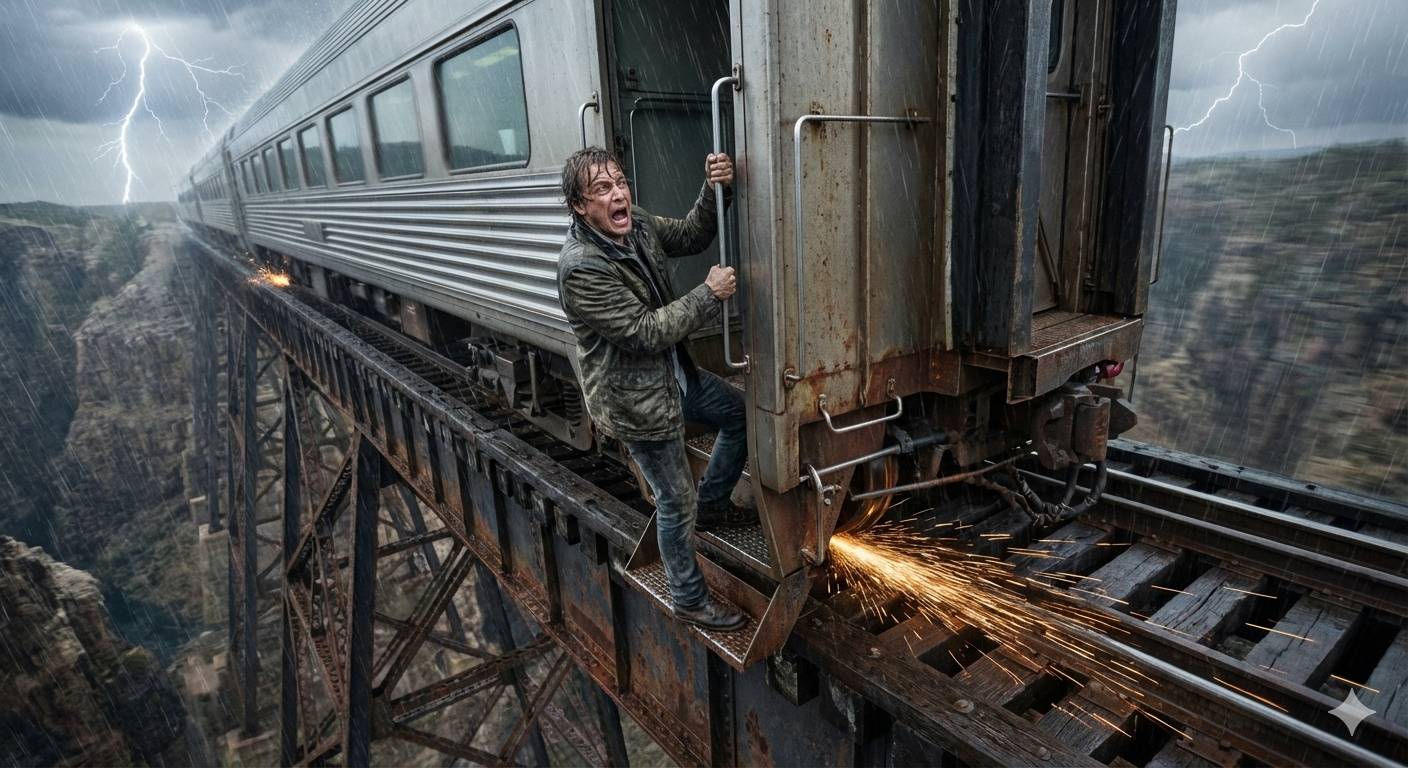
Separation and divorce, and particularly when it blind sides, feels very much link being trapped on a run-away train. Despite feeling out of control, it is interesting how even on a runaway train, you can realize it may have very well taken you to a really cool place in life. Don’t get me wrong — a ride on a runaway anything is scary as hell but then again so are most things in life and particularly those along very unfamiliar paths. What can we learn about ourselves as be negative through separation and divorce? Who is that person that emerges from the other side? In this post, I explore these questions and more in Dating Life 101.

The Reality that We are Heading for a Divorce

For the past few years life has felt out of my control — trapped in a dark room, feeling and fumbling along a wall, tripping over life here and there and not really knowing how I arrived in this maze, and even worse, not having any idea where the exit may be. You grow up expecting life has this typical pattern, school, more school, even more school, work, and hopefully if the cards fall into place, a home, family, a  fish, a dog, you know the story.

We all hear the statistics, forty-one per cent of Canadian marriages end in divorce, notes a recent study from the Vanier Institute of the Family (1), however we all tell ourselves that we will beat the odds, we will do better than our parents, our aunts or uncles. We will be that old couple holding hands and laughing well into retirement.  For many of us, me included, we didn’t even come close.  However, looking back, was that necessarily a terrible thing?

As a species, we have had mind-blowing success at evolving and mastering our universe no matter how you define it.  We can survive in the harshest of climates, from the depths of the oceans to a race across our solar system and beyond.  We adapt to change, to conflict, we grow, we mature. So how much different is being thrown into single hood?  Is it simply another hurdle in life we need to conquer, learn from and move on.

When we emerge from a depths of conflict, hopefully we can step back and look at ourselves objectively and recognize that relationships  are always a two-way street. Although “we” may not have been what put the final nail in the metaphorical coffin our past lives, in most cases I think we had an equal part to play in our relationships getting to that point.  Where did we make a wrong turn, where did we forget to compromise  in our past relationship over sacrificing ourselves or our partners needs.  Over the past few years I have tried to reflect on these questions, the big proverbial “What the fuck happened in my life?”  Do I have all the answers, now what would be the fun in that, however in that time of reflection I have come to realize two principles that I will call emotional resiliency and emotional confidence that will become pillars as I move forward with life’s next adventure.

Emotional Resiliency 

I admit, like most, my past life became routine at best, work, kids, sanity break where me and my partner literally forgot the other existed.  Honestly, when was the last time you and your partner sat down and just chatted over coffee for hours at end?  If one was not battle kids to bed, or cleaning it was the other.   You fall into that parental trap and forget about the most important characteristics in yourself and with that,  your partner.  Truth be told, we spend 95% of our lives worrying about stuff that really does not matter at all. Imagine worrying day in and day out about breathing or your heart beating.   Seems ridiculous, doesn’t it?  Us breathing or our heart pumping, is essential and will happen not matter what else is going on.

The truth is that many of the aspects in life we spend our time stressing about are as essential as breathing and will happen no matter what else is going on around us.  The kids will be fed, or bathed, and always loved.  You will eat, and even the messiest of us will make time. No matter what else is going on, those basic necessities in life will happen no matter what, so why worry about them.  Yet, we are consumed by these little things in life. We need to stand back and realize the power of worrying about ourselves and with that our partners.

There is a great children’s story book called “Have you filled a bucket today?”  The general idea is that “the bucket” represents your mental and emotional self.  When your bucket is full, you feel more confident, secure, calm, patient, and friendly. Your thoughts are positive and you expect positive results. When your bucket is overflowing, you experience an intense happiness that can spread to those around you.

We fill our buckets in many ways, from our work, our community, where we volunteer.  It is incredible when you see someone’s  passion shine so brightly that even when they talk about a bad day, they radiate happiness, how  incredible and  overwhelming of a feeling we experience when your child snuggles up to you, or the tingle from the tips of your toes to your fingertips when someone special simply looks at you and smiles.  No matter how we fill our buckets our emotional resiliency grows stronger and with that us as stronger individuals.   You can tolerate the day-to-day ups and down, the stresses of life are that much easier to handle and we become much more resilient, and with that more patient, better parents, partners and friends.

Emotional Confidence 

Relationships are incredible high and even more so as a way to supercharge our buckets.  Just think back and remember that incredible awe that you felt from something as simple as a kiss, a touch or a hug.  Don’t get me wrong, relationships come in countless shapes and sizes and no one definition fits us all.  However no matter if you are looking at your best friend, a confidant, a coffee buddy to waste away the hours, or an incredibly amazing person to share the other side of your bed, you need the emotional confidence to  realize that in a “relationship” you should not be the one doing all the bending and that emotional compromise is two-way street.   The truth is that Tom Cruise’s famous line in “Jerry MaGuire” of “You complete me” has it all wrong.  Never look for someone to COMPLETE or supplementary to you but rather the confidence to look for someone who is complimentary to you.

Compromise is critical to any successful partnership – it is based on a fine balance of two people – their wants, desires, needs. The reality is that not having the emotional confidence to voice your emotional needs by sacrificing what you want and need in life and out of a relationship; ultimately settling for anything less will not make you happy – in fact it will become a hurdle over time. What is even more important is that a relationship consists of two WHOLE individuals, who are growing and changing with each breath, experience and desire, and much like the two people in the relationship, a relationship must evolve with those people, and build on each others strengths and support their weaknesses. Just stand back and try to remember yourself when you met your significant other and how much both of you have changed since that time.  Are you still as active, what about friends, or weekend adventures?   How do you spend your time, alone or as a couple?  When you dated, what was it like, what did you do, what did you talk about?  How is life different now?  It is a given, we change, life changes, and so does our load of responsibilities.  However, it does not mean it is the end.  As a complementary couple, you will mould to this change and to each other.  Don’t get me wrong, this takes work and time, and ultimately the commitment however, will only make us stronger.  After all, relationships are both rewarding and require work, painful at times yet, fulfilling beyond imagination.

The Next Steps

So where did this runaway train take me?  Well, to that I can honestly say I do not know.  However, that is not necessarily a bad thing.  I know I am not the same person I was when I was pushed onto the train a few years ago.  Am I perfect, well, truthfully, who is?  Do I like the person I have become, absolutely.  Am I strong, and confident, and can hold my own in most awkward adult situations  – well ok, I am getting there, however, know for sure that I will stand up for me, no matter the consequence nor I do not think there will be a personality that will overshadow me when push come to shove.  After all, a resilient Mark is a powerful force.  I have an amazing and incredibly supportive group of friends who will put me in my place, and pick me up when I stumble, the confidence to hold up my end of a coffee / conversation marathon (the record is about 5 hours with a near stranger, are you up for attempting a PB), and know I can kiss a girl and makes her knees buckle, and this is just the tip of the iceberg.  As I noted, life is evolving as am I.  We make mistakes, and we growth from them, we make decisions and live with the consequences, we kiss and we cry, yet with each breath, chisel away with a new version of us.   Some come on train — lets see what you have in store for me as this is only the beginning.

(1) http://vanierinstitute.ca/wp-content/uploads/2015/10/BTN_2013-12-11_Separation-and-Divorce.pdf
Running Tip: Making Your Long Runs (LSD) Count

0

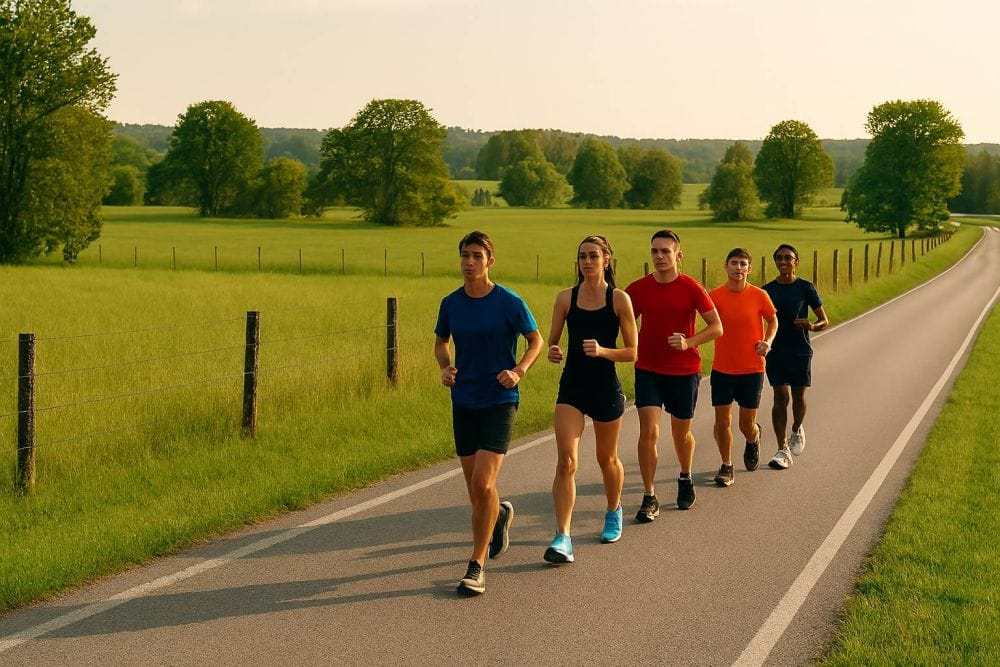
LSD or long slow distance runs should be considered your most important run of the week and done one half to one minute slower per kilometre slower then your race pace, so that you can easily hold up a conversation.  LSD runs assist in developing stamina, building strength and pace judgment, and teaching our body to burn fat effectively.  LSD also it improves your cardiovascular system, strengthens the heart and increases the blood supply in the muscles; it enhances the body’s capacity to deliver oxygen to your muscles (VO2 Max). Here is an overview of a a great article by Runners World on the benefits of long slow distance (LSD) runs no matter your distance goal.  

Question: I never race more than 5K. Why should I do long runs?

Answer: Long runs are for every runner, not just marathoners. The runners I coach in college run a weekly 13- to 15-mile long run even though some seldom race over a mile. The long run increases aerobic base, improves running economy, and boosts confidence.

Enjoy weekly long runs provided you:

  1. Follow your long run with a recovery day of very easy running, cross-training, or rest.
  2. Start your long run well hydrated and consume sports drinks and gels en route. This is excellent practice for the marathon and will keep you from getting overly fatigued.
  3. Limit your long run to 1:45 or less (unless you’re training for a marathon–see number 5, below).
  4. Consume 3 to 4 grams of carbohydrate per pound of body weight daily to make sure carbohydrate stores stay loaded.
  5. Alternate long runs with very long runs when training for a marathon. For example: 2 hours one week, 2:45 the following week, then back down to 2 hours the week after that.
  6. Run with someone of comparable ability. Otherwise, your long run may turn into a tempo run or a Sunday stroll.
  7. Ease back into training if you’ve missed a long run due to illness or injury. Going long as soon as you feel better can overtax an already battered immune system. Instead, do half or three-quarters of your scheduled long-run distance, then resume your normal schedule the following week.

Read the complete article here.

Photo Challenge: And Then there were Shovels

For this week’s challenge, share a photo of a landscape: a wide establishing shot of a scene in nature or an urban setting. —WordPress Weekly Photo Challenge

Rural vs Urban
North end of Queensville, Ontario, Canada

I live in an area that has matured from a lakeside cottage community to a small town.  I remember when the first stoplight installed in town was a big issue, not to mention McDonalds and Walmart, or when there were more seasonal residents on the street then permanent homes.  From intensification to Greenfield Development, the Greater Toronto Area is a destination for people around the globe to immigrate to, and call the area home.

The picture above was taken just at the fringe of a new growth area, what is now a farmers field, will slowly become a new community.  What better picture to capture for this week’s Daily Post Photo Challenge on “Landscapes”, as a reminder of what was and what is to come.

Here are a few more from the series:

Glimpse of a Perfect Day (sunrise)

Urban vs Rural

Drawing a Short Straw in Life: Fighting Back against Chronic Disease

We all have a short straw in life or at least something we consider our short straw. You know, an aspect in our lives – a missed promotion, our health, a series of bad relationships, or simply nothing seemingly to go our way or how we pictured life should be at this point in our lives –  those moments where we throw our hands up in the air and admit defeat as we plead “Whuzzat?! Hello, universe? It’s me, Mark!  What the #$%^!” ¹. As someone with two chronic illnesses (insulin dependant Type-2 diabetes and Crohn’s disease), life can get overwhelming at times. Read how I how running helped me take control of chronic illness.

Short Straw Syndrome

So what is my short straw and do I really have any reason to be complaining? Well, I suppose that is a relative question and in the eyes of the beholders, however, for those that are new to Making You Think here is a quick rundown on me and I will let you decide.

A Recap on My Chronic Illnesses

About 10 years ago my body decided to hate me, I started with an unusual amount of canker sores in my mouth (usually a half a dozen at a time) – something I always had so why think twice, just more than usual.  As if that was not enough to grab my attention, I started to experience a persistent upset tummy, the runs, blood where I would not expect it, and a fever that lasted a few weeks.  Ok – I admit, by this time my internal “oh crap” meter was starting to wake up.  However, truthfully I just hoped I had a really bad bug that is just could not shake.  My family doctor tried me on antibiotics, which didn’t change the situation, changed my diet too much the same effect.  The last straw was when my body decided to go into overdrive and hit me with debilitating arthritis that presented itself similar to rheumatoid arthritis.  Literally, seniors pushing their walkers were passing me in the hallways.  I was eventually referred to the emergency room, which ended in a barrage of tests and a two weeks stay in hospital and finally being diagnosed with a chronic disease “Crohn’s“.

What do you think, short straw?  A few years later my pancreas decided to take it easy and retire – now I can add type-2 diabetes to the mix; seriously, hello, universe? Two chronic diseases? Short Straw?

As I suggested, the idea of a short straw, like many situations in life is relative to everything else that is going on around us, and I admit having a chronic disease, such as Crohn’s, really is shitty.  Seriously — we all know we will get sick from time to time, heck, we may even end up in the hospital sometime in our lives, however as soon as you are tagged with that word “chronic” should your life change from normal to victim?  Is chronic an automatic entrance to the Short Straw Cub?

So what is chronic – the Centre for Managing Chronic Disease at the University of Michigan defined a chronic disease as “a long-lasting condition that can be controlled but not cured.” Long-lasting, controlled, but not cured – again, short straw?  The Centers for Disease Control cites that chronic disease is the leading cause of death and disability in the United States and accounts for 70% of all deaths.  Data from the World Health Organization shows that chronic disease is also the major cause of premature death around the world even in places where infectious disease are rampant.  Admittedly these figures include all chronic diseases which range from diabetes, Alzheimer’s, epilepsy, and heart disease to name a few, so a bit closer to home, a report commissioned by the Crohn’s and Colitis Canada in 2012,  estimates that one in every 150 Canadians has irritable bowel disease (IBD) and that are approximately 233,000 Canadians living with IBD (129,000 with Crohn’s Disease and 104,000 with Ulcerative Colitis).   Is my Crohn’s and diabetes really a short straw if I am in such good company?

Putting Life in Perspective

Looking on the brighter side of life – is my Crohn’s disease or diabetes going to kill me?  I would say, no? So, in other words, life could be worse, and truthfully, how many people typically have their blood tested a minimum of six times a year, have colonoscopies every 18 to 24 months (colon cancer and Crohn’s checkup in one visit), and have a few medical specialists and a family doctor to watch over them – if anything else is about to go wrong, I have one heck of an early warning systems going.  At the same time, as I peer over to my dresser, I can easily count six medicine containers that are a part of my typical day and have two others in the refrigerator that I take every week to 10 days.  The Crohn’s and Colitis Foundation estimates that the total costs from IBD in Canada are conservatively at $2.8 billion per year in 2012 (over $11,900 per person with IBD every year).   In 2014 I spent $25,660.45 on medications, and close to $27,000 this year with six weeks to go (for those that are curious –  20% is not covered by my primary insurance company (employer), all I can say is thank goodness for third-party insurance programs offered by the various pharmaceutical companies).  Again – short straw?  What is interesting is that as I look i the mirror, this is who I am.  I am not confined to a wheelchair, nor do I need to drag a portable oxygen container around with me.  I have the benefit of both my sight (ok, that one is questionable), my hearing, and all four of my limbs.

Taking the Bull by the Horn, using Running to Balance Chronic Illness

12080121_10156113135335591_63802707146847192_o
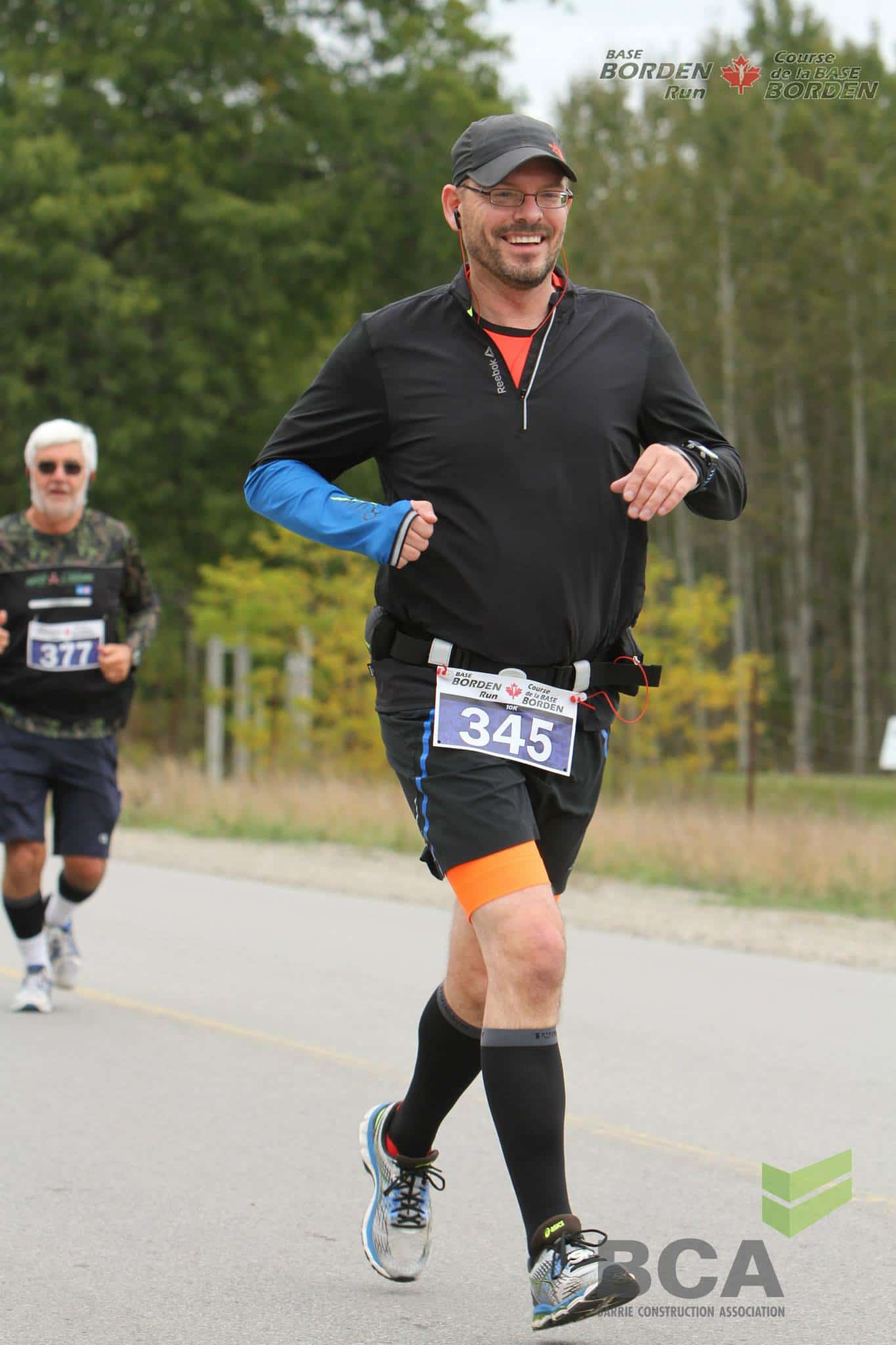
10K run at CFB Borden, September 2015

Like anyone that has a chronic disease (diabetes, being able to control their weight, heart disease) we have two choices – we can roll over, and let our short straw dictate how we live our lives, or we can use our short straw to motivate us.  I admit I am very fortunate – I have a great career and have the benefit of amazing medications (Humira and Methotrexate mix) which for the time being, my body is playing nicely with.  I wonder what “normal” feels like, however, maybe that is as subjective as anything else in the world.  For me, normal is simply being able to live my life without having my diseases control my life.  For a few years, I was on Remicade® (infliximab) which is administered through an intravenous injection – aside from being a great medication, it was interesting sitting in the infusion clinic with a handful of people who could relate to my illness.  It made for a bit of a community and heard many stories from people whose illness has kept them at home for months or years, have not been able to work, been too afraid to travel, to go to the store as they could not trust their bodies.

It is easy for any of us to make excuses – I am too tired, I am not feeling 100%, I am sad, leaving the comfort to home scares me.  I have been there – in University I had a route of public washroom mapped out between campus and my apartment as you never quite knew when you needed to race to one.  However, putting my arms up in defeat has never been an option.  Today I bike, I race after my two boys, I run, and training for my first 1/2 marathon (21.1 km / 13.1 miles).   I am attentive to my body and have taken the time to learn when it is warning me it wants to misbehave, however, I have found that balance.  Don’t get me wrong – I have bad days, and scary periods where I start to think to myself, here we go again, however, I push on.

Yes,  that guy to the left is me — looks pretty normal doesn’t he?  Honestly, looking around your circle of friends, family, co-workers, how many people can you pull out of the mix that can say, hey – 5, 10, 15-kilometer run, been there, done that, let’s do it again next Sunday?  Life is about baby steps – at times we need to proceed with caution and my running is a great example – I have Crohn’s and diabetes neither of which go well with managing energy and blood sugars – that is a reality I should not ignore; however it has not stopped me from taking that next stride.   As yourself, what are your limits, and even more significantly what is your comfort level and start from there.  In my running it was shorter distances and more frequent walk brakes (3 and 1’s to start – run three minutes, walk a minute for a 3 km or 2 miles).  How did my body feel, how were my sugars holding up?  3 and 1’s turned to 5 and 1, and then 10 and 1’s — again, baby steps.  My distance grew at the same time, 3 to 5 km, to 6 and 8 and 20km.  My comfort blanket is no longer that route of public washrooms, but my Sport Beans and Boom Nutritions power gels tucked away in my running belt – simply knowing that I have the tools, the training, and the confidence to make it to the end of the run is a huge mental boost.

I concede I did draw a short straw in life – the “omg” and concerned tones when people hear my stories are hard to deny, however, with any short straw we have two decisions in life – use that short straw as a ticket to victim mentality or use it to drive us and push our limits whatever they may be.


¹ from the Douglas Coupland novel, “Worst. Person. Ever.”  A hilariously funny novel, that made me an instant fan of Coupland.  Read the first five pages and you to will be hooked.

5 Tips for Photographing Sunsets

The great staff at Henry’s published a helpful article on photographing sunsets that I had to share. Take a look at the following 5 tips on how to photograph sunsets before your next photoshoot.

Appreciation
18.0 mm ƒ/9.0, Shutter: 1/100 ISO: 100

Tip One – Underexposure

Your colours will be vivid and defined by underexposing the sunset. You will add drama to your image using this technique. There are two ways to accomplish underexposure. The first way to shoot is in aperture priority using exposure compensation for as long as the sun remains in the sky. When the sun goes down switch to the second method by using manual mode to get a better exposure because the less light you have, the more inaccurate your exposure meter will be. Using these two methods makes a significant difference in the depth of your colours, and that is why “they” are the first tip.

Tip Two – The Foreground

Your sunset will be more interesting if there is a subject matter in the foreground. A tree, bird, rock, bench, person, or animal can make your sunset pop as it encloses the object in the foreground. Mount your camera on a tripod and use off-camera flash to add a touch of light to faces. Using a fast shutter speed with off-camera flash will create richer and deeper.

Tip Three – The Horizon

Sun Set over Lake Simcoe
60 mm ƒ/13.0, Shutter:1/200 ISO: 100

Under no circumstances should the horizon cut your picture in half. It should preferably be located in the lower third of the image, especially when the sunset is beautiful. Another option is to place the horizon in the top third of the image when the sunset is less vibrant.

Tip Four – Silhouettes

You need a fast shutter speed to capture a silhouette and place your subject above the horizon, and that’s almost all there is to it. Have your object in front of your sunset light source, and be sure it is recognizable in silhouette form. An ideal subject can be almost anything including a bird in flight, bridge, pier, drifting boat, animals, people in action, buildings, and steeples. You will think of many more, including the romantic couple kiss.

Tip Five – Shoot in Raw

A sunset image contains a wealth of light information that is simply tossed out if you shoot JPEG, and so much of the colour’s vibrancy will be lost. Use a remote shutter to ensure there is no blur.

Source: Tips For Photographing Sunsets

Photo Challenge: Rule of Thirds

This week’s Daily Post Photo Challenge is the Rule of Thirds.  I admit I am not usually one that follows the rule of thirds, then again maybe that is the amateur in much rushing to the surface.  To jump to this weeks picture CLICK HERE.

What is the rule of thirds for those that are still going, hmmm ….

Rule of Thirds - Digital Photography School
Rule of Thirds – Digital Photography School

Darren Rowse of the Digital Photography School has a great visual description of the rule of thirds, however, in brief, Darren describes the rules as “The basic principle behind the rule of thirds is to imagine breaking an image down into thirds (both horizontally and vertically) so that you have 9 parts.  The theory is that if you place points of interest in the intersections or along the lines that your photo becomes more balanced and will enable a viewer of the image to interact with it more naturally. Studies have shown that when viewing images that people’s eyes usually go to one of the intersection points most naturally rather than the centre of the shot – using the rule of thirds works with this natural way of viewing an image rather than working against it.”

Below are a series of three pictures as I played around with this weeks assignment on the rule of thirds.

The Original Photo

This picture was taken from the bank of the pond pushing the limits of my 300 mm lens.  This is a raw of a photo as they come.

My Original Picture (300 mm; ƒ/5.6; 1/125
My Original Picture (300 mm; ƒ/5.6; 1/125; ISO 100

My Final Edits

The second was my original published photo (as you can see, I originally ignored the rule and placed the most important point of interest (the White-Tailed Deer) dead centre in the photo.

14562107660_fb980d3c1f_k

Considering the Rule of Thirds

My final image is an attempt to recompose the picture to capture the rule of thirds from this weeks assignment.

15992913994_290b6dc351_k

Which works better – which doesn’t?

Photo Challenge: Symmetry in Nature

The topic of this week’s Daily Post Weekly Photo Challenge is Symmetry. As I look around my desk, the elements of symmetry are profound, something as simple as the game controller in its shape, and distance between controllers, the two matching desks in each corner of the room, to architecture that surrounds my neighbourhood. However, can nature by symmetrical?

The lighting in the following picture is not the best (I am looking forward to seeing how my f/2.8 will compare when I have a chance). However, I love the calm of the water and a nice capture for this weeks challenge.

Morning Sunrise


Morning sunrise on Little Hawk Lake, Ontario, Canada

The same morning as a time-lapse video on my iPhone 6.

[flickr video=15384809985 w=640 h=360]

Time-lapse video of a morning sunrise on Little Hawk Lake, Ontario, Canada

Here was my runners up ….

Fall Drive

Photo Challenge: Scale – Through A Winters Oasis

In response to this weeks Daily Post Photo Challenge – Scale, I wanted to find an image that represented my community.  Without the towering sky scrapers or majestic mountain views my automatic response was to reach for my macro lens.  Try as I may, I could not capture a single snowflake (not sure if it would even be possible) however, I wandered out on what turned out to be a rather cold day (-17 C with windchill -32 C).


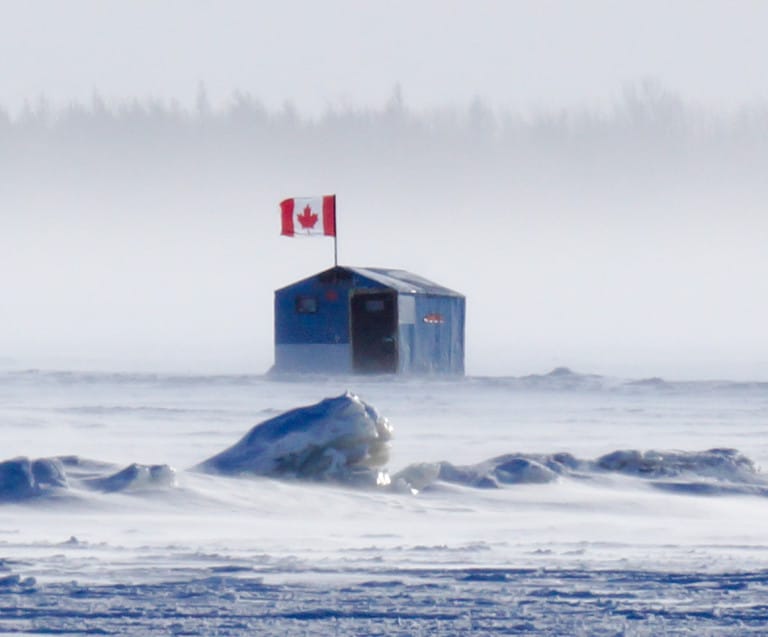
Ice Fishing on Lake Simcoe, Ontario, Canada

Each winter, hundreds,of cozy huts are dragged out onto the Lake Simcoe ice for a season of fishing. Sitting alone, or clustered in groups of a few dozen, avid fishermen enjoy the protection for the harsh wind and cold in their homes away from home. The scale of these ice hits over the vastness of the lakes frozen tundra can be staggering, particularly when you find yourself in the middle of a snow storm.

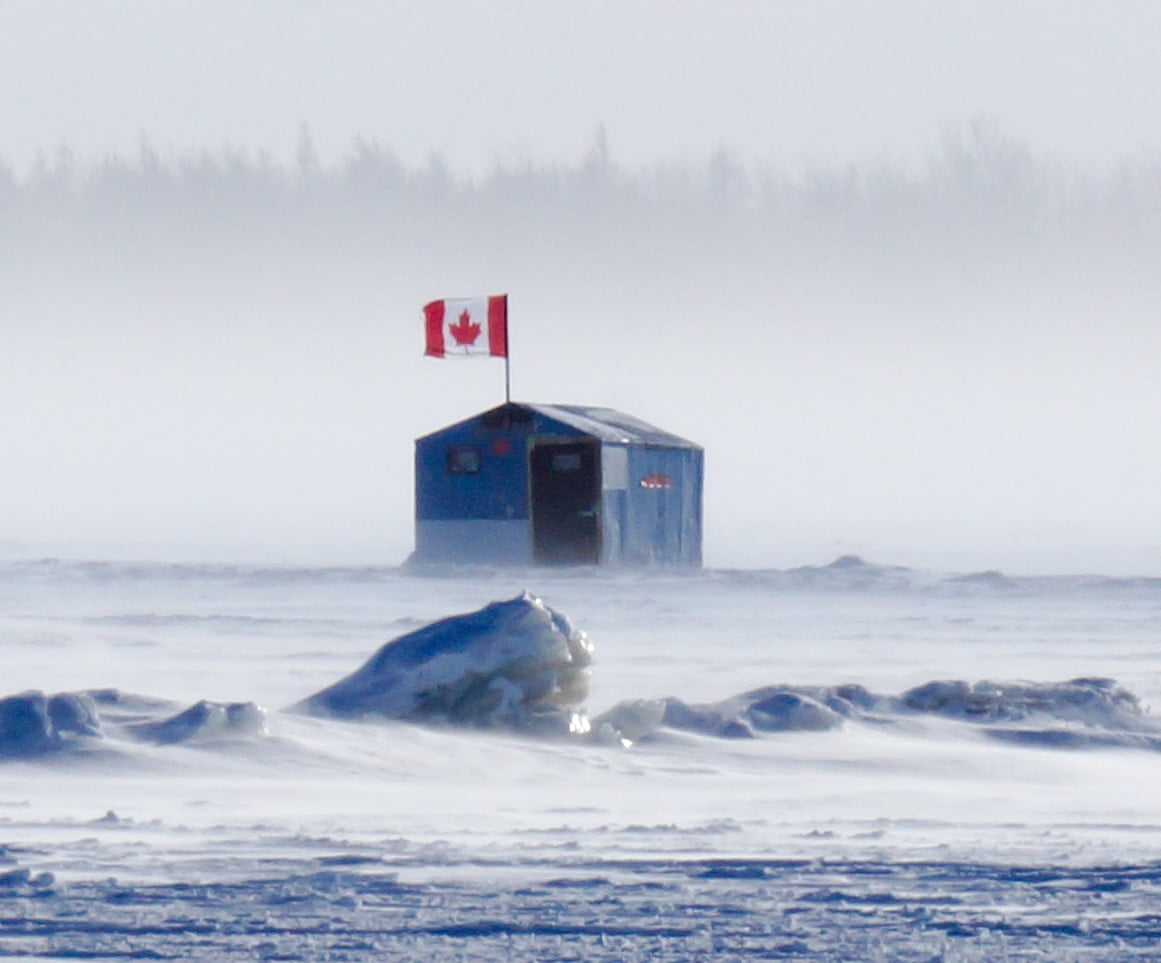
Here is a zoomed in picture of the hut in the middle of the image.

ice_fishing_Lake_Simcoe_2015

Photo Challenge: Express Yourself

My little niece has a bit of a personality and rightfully so as the last out of six grandchildren she needs to make herself known (now she figured out that trick at less than a year is a different story).  Her dynamic personality always makes for some interesting candid shots.  What better shot to represent the weekly Daily Post photo challenge of “Expressing Yourself”.

And we thought "Grumpy Cat" Had it bad

Photo Challenge: Capture Colour in the Absence of Colour – Winters Retreat

One of my favourite pictures of late. In the midst of early winter, there is still colour to be found along with the grey and white.  Today’s photo challenge – Capture colour in the absence of colour?

Autumn: One of my favourite images.

I recently migrated my blog from a self-hosted site to wordless.com and I have to admit, I miss the control and flexibility I had highlighting my Flickr Photos. This page was as much a test as it was to give everyone a taste of winter.  If anyone has some suggestion on how best to embed Flickr Photos into WordPress.Com sites please share, particularly a way to show all or part of my PhotoStream.