


By Derek Dimond (Guest Writer)
I spend a lot of my day sitting now. Sitting is not something I chose because I got lazy. Standing is what brings the trouble. If I stand in one place for very long, my legs start to go numb, and walking for any real distance hurts. Sitting takes most of that pressure away, and bending forward a little helps even more, so sitting has become my default whether I like it or not.
That comes from spinal stenosis, a narrowing in my spine that has been getting worse over time instead of better. Some mornings I wake up knowing it is going to be a limited day before I have even done anything, and I never know exactly how much I can count on.
It would be easy to use that as a reason to stop trying altogether, and I will be honest, I thought about it. I did not quit, though. This is not medical advice, and I am not telling anyone else what to do with their own body. This is just my story, and what staying active looks like for me now.
The Army was my job
I served in the Army for 20 years, from 1994 to 2014, and I retired as a Staff Sergeant. My job was 74D, a Chemical Operations Specialist, and for two decades my body was part of how I did that job every single day. You carried what needed carrying, you moved when it was time to move, and you kept up with the people next to you.
The last part of my career was at Fort Lewis in Washington, from 2003 to 2014. For much of that time, from 2003 to 2010, I was with the 1st Special Forces Group, 3rd Battalion, at Fort Lewis, Washington. That was not a desk job, and it was not an easy place to hold your own. You had to be fit, you had to be ready, and you had to keep up with soldiers who set a very high standard. I did that work for years, and I am proud of how far I got.
I was Airborne, for God’s sake. I was a paratrooper for 12 years. Jumping out of an aircraft and hitting the ground was part of the job, and I did it again and again. I cannot prove where every bit of this pain came from, but I believe some of it, probably most of it, goes back to those landings and to all the hard use my body took over 20 years. Your body keeps the bill, even when you do not feel it at the time.
Compare that to where I am now. The same legs that carried me out of an aircraft now go numb if I stand in one place too long. The same body that kept up at Fort Lewis now has to plan around sitting down and bending forward just to get some relief. That is why this change has been about more than pain, even though there is plenty of pain in it. When your body has been reliable for that long, you build who you are around it without even noticing. Losing that reliability feels like losing part of yourself. The pain I could name. That other part was harder to talk about.
Pushing through did not work
The Army taught me to push through pain, and for a long time that approach served me well. It does not serve me well anymore. If I push through standing, the numbness still comes, and if I push through a long walk, I usually just pay for it later that day or the next morning.
My hand taught me the same lesson in a smaller way. It will lock up out of nowhere, with the pain at a solid 6, and my first instinct is still to fight it and force it open. Fighting it never works. What works is the opposite of what I was trained to do: I let go, I get a breath in, and the hand lets go on its own. Learning to release instead of force was a real change for a man with my background.
Quitting did not work either, because the days when I sat all day and did nothing left me feeling worse, not rested. So I had to find a third way between pushing through and giving up. I change the plan, I lower the demand, and I keep going in whatever form the day allows.
Yoga helped me
Yoga is where that third way finally started to make sense to me. I am a 500-hour certified instructor, so people sometimes assume I walk into class with everything figured out. I do not. On Monday mornings I still take class as a student, the same as everybody else in the room, and there are plenty of days when I am the one modifying a pose or stepping out of it early.
That includes hot yoga, which I do twice a week. Some days I can do most of the class and feel steady doing it. Other days I sit out poses, sometimes several of them, and I have stopped apologizing for that or treating it like a failure. Sitting out one pose today is often the reason I can come back for the next class at all.
I teach yoga to veterans out of the Buffalo VA, and that teaching is the only work I have done since I left the Army in 2014. I teach on Monday afternoons and on Tuesday and Thursday mornings, working with veterans who are dealing with their own versions of a body that does not do what it used to do.
Teaching also holds me accountable in a way that practicing alone does not. I tell the veterans in my classes to listen to their bodies, to work with what they have that day, and to keep showing up even when the day is smaller than they wanted. I cannot say that to them and then skip my own practice because my morning was hard. On the rough days, having a class to teach is often what gets me up and moving.
I still lift
I still lift weights, too, twice a week at Planet Fitness, but I do it on different terms than I would have years ago. I start each exercise light, I keep the movement slow and smooth, and I do one exercise at a time for three sets instead of rushing through a long list. The work is about control and good reps, not about proving anything to anyone in the room.
My rule is simple enough to follow on a bad day: if I can get eight solid reps, the weight can go up a little next time, and if I cannot, it stays where it is. I am not trying to max out, and pain is not the goal. Moving is the goal.
What it means now
Staying active does not mean getting my old body back, and it took me a long time to stop measuring myself against that standard. That body belonged to a different chapter of my life, and chasing it only made the present one feel like a loss. What staying active means now is using the body I actually have, on the day I actually have it, without pretending it is something else.
Some days that still looks like a full class and a day where I surprise myself a little. Other days it looks like a short practice, a few careful movements, and a lot of sitting in between, and I have learned to count those days too. I moved what I could move, and I did not hand the whole day over to the injury.
That is the lesson I keep coming back to, for myself and for the veterans I teach. You do not have to be unbroken to keep going. You have to be willing to keep going in a different way than you planned, on days that are smaller than you wanted. That is what I do now, one day at a time, and it is enough to build a life on.
Derek Dimond is a retired Army Staff Sergeant who served 20 years, from 1994 to 2014, as a Chemical Operations Specialist, including time with the 1st Special Forces Group, 3rd Battalion, at Fort Lewis, Washington. He was a paratrooper for 12 years. He is a 500-hour certified yoga instructor and teaches yoga to veterans out of the Buffalo VA.
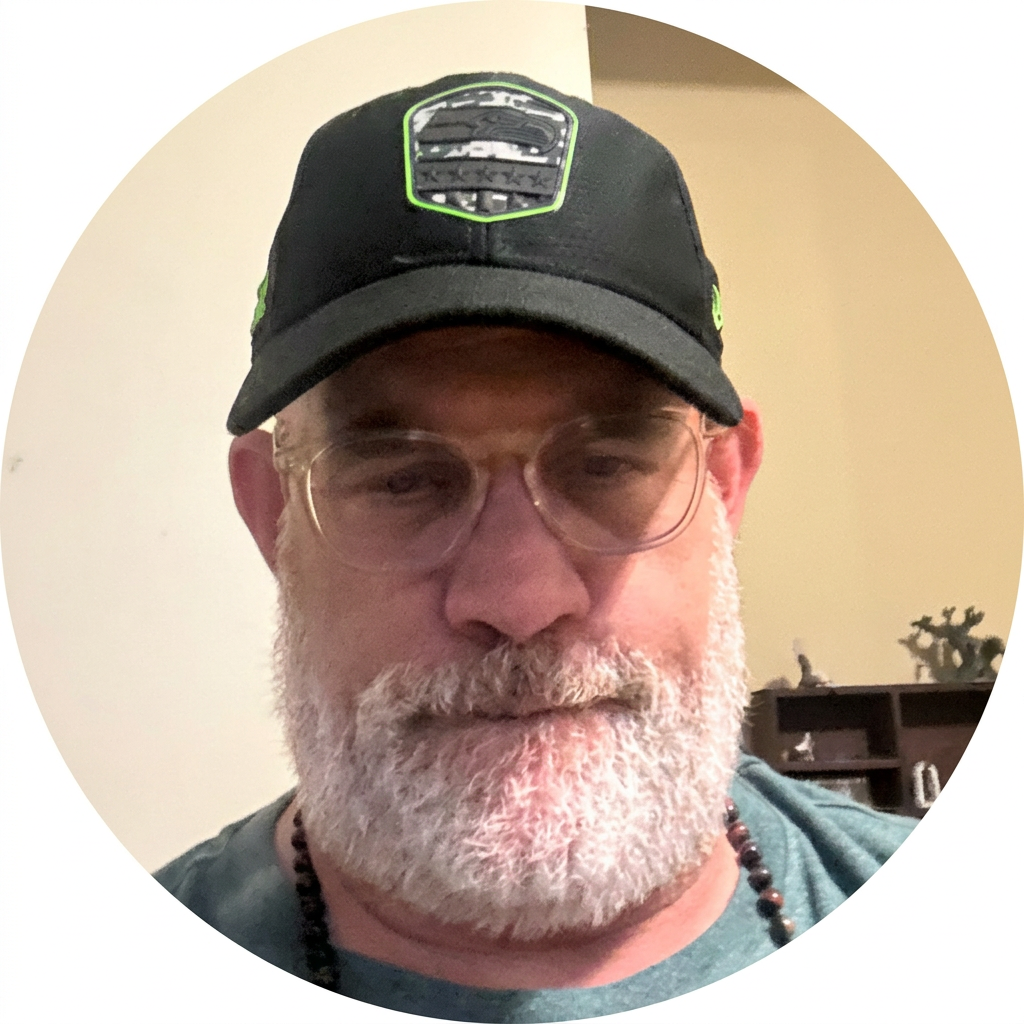
About the Author
Derek Dimond is a retired Army Staff Sergeant who served 20 years with the United States Army as a Chemical Operations Specialist and a Paratrooper. He is a 500-hour certified yoga instructor and teaches yoga to veterans out of the Buffalo VA.

